
Was He Gay?
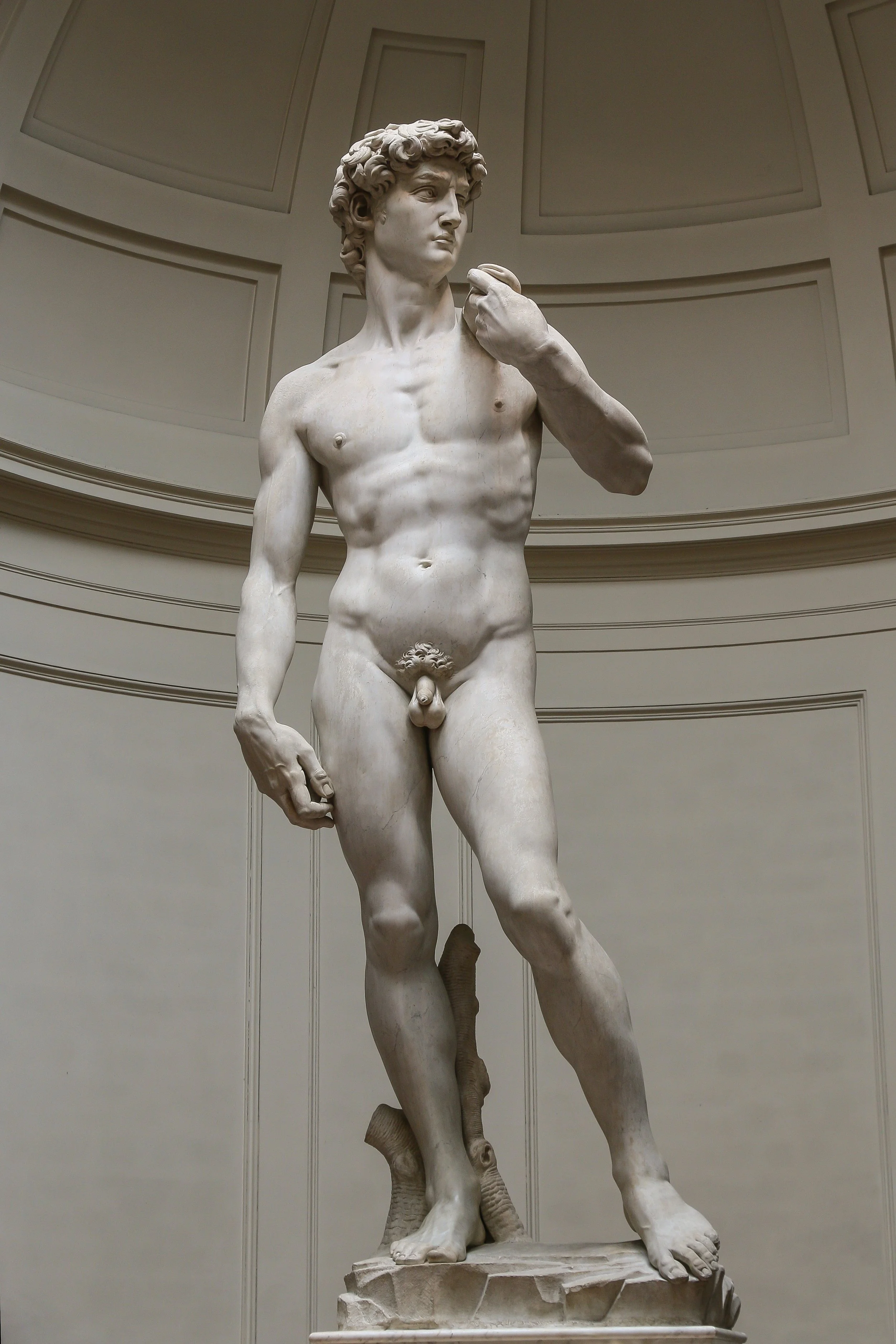
Jörg Bittner Unna, CC BY 3.0, via Wikimedia Commons
The quotes below are from my increasingly rewarding reading of Inventing the Renaissance, by Ada Palmer, which I picked up after watching clips of an interview she did on Dwarkesh Patel’s podcast. Possessed of a world outside of herself and eager to share and explain what she sees with the listener, Palmer is as engaging on camera as she is in her writing, and in much the same way: keeping a lot of things in the air alongside the reader to make sure the complexity of the period lands (along with parenthetical reminders, irreverence, and jabs that maintain the reader’s ‘unseatedness’ toward the subject—like, can we even call it a period?).
Back in the History Lab, my dear friend Michael Rocke (author of the fabulous Forbidden Friendships, the go-to work on Italian Renaissance sodomy) is even now finishing up his study of Michelangelo’s sexuality, but to give my brief, incomplete best: Michelangelo has been celebrated as a gay icon, and is a wonderful antidote to the distorted histories which give schoolchildren the impression that homosexuality didn’t exist between Socrates and Oscar Wilde. But gay is a word-concept deeply embedded in the modern era, invoking modern fashions, affects, and political experiences. To call Michelangelo gay is like calling a Renaissance market a “shopping mall”—the facts are right, but the valences (suburbia, teenagers, consumerism) all wrong. Renaissance ideas about homosexuality were articulated differently and disobeyed differently, from today.
Was Michelangelo having sex with men? . . . .
Happily, we now have good evidence that, yes! Michelangelo was super having sex with men! The important part was proving it using our evidence-based research on homosexuality in the period, not projecting backward the aesthetics of the age of Oscar Wilde. We now know what the letters of Renaissance male lovers usually read like, the language people used. We now know customs and expectations. Several of Michelangelo’s proposed lovers were his students or apprentices, and we can compare his dynamic with them to other cases of apprenticeship, both those provably with and those provably without sexual components. With this evidence in hand, we can firmly identify some of his beloveds, with corroborating documents, etc.
